
Thai cuisine is famous for its balance of sweet, salty, spicy, and sour flavors. Yet, behind this harmony lies a world of ancient fermentation methods that transform simple ingredients into deep, bold, and unmistakable tastes. At Mystic Thai, these fermented elements elevate dishes with complexity and character. Although the flavors may seem intense at first, they play a vital role in shaping authentic Thai cooking. This guide explores the traditional fermented ingredients used at Mystic Thai and explains how each one contributes its unique flavor profile.
The Foundation of Flavor: Fish Sauce (Nam Pla)
How Fish Sauce Is Made
Fish sauce is one of Thailand’s most defining ingredients. Producers typically ferment fish with salt for months or even years. During this natural process, the fish breaks down into a clear, amber liquid packed with umami. Since the fermentation happens slowly, it creates depth without overpowering the dish.
How Mystic Thai Uses It
At Mystic Thai, chefs use fish sauce to season soups, curries, marinades, and stir-fries. Because it blends so well with herbs, spices, and lime juice, it enhances flavor without taking center stage. Although fish sauce may smell strong on its own, it transforms when combined with other ingredients. As a result, dishes gain roundness and balance.
Shrimp Paste (Kapi): The Deep, Earthy Backbone of Thai Cooking
How Shrimp Paste Is Crafted
Shrimp paste is a highly concentrated fermented product made from ground shrimp mixed with salt. The mixture dries under the sun and ferments for several weeks. This process produces a dense, rich paste with an earthy aroma. Although its scent can be intense, its flavor becomes incredibly smooth when cooked.
Use at Mystic Thai
Shrimp paste appears in curry pastes, dipping sauces, and traditional rice dishes. The chefs incorporate it directly into the base of their curry blends. Once fried with garlic, lemongrass, and chilies, the paste adds richness that no other ingredient can replace. Because of this, many classic Thai dishes rely on it for authenticity.
Pickled and Fermented Vegetables: Brightness with Depth
The Fermentation Process
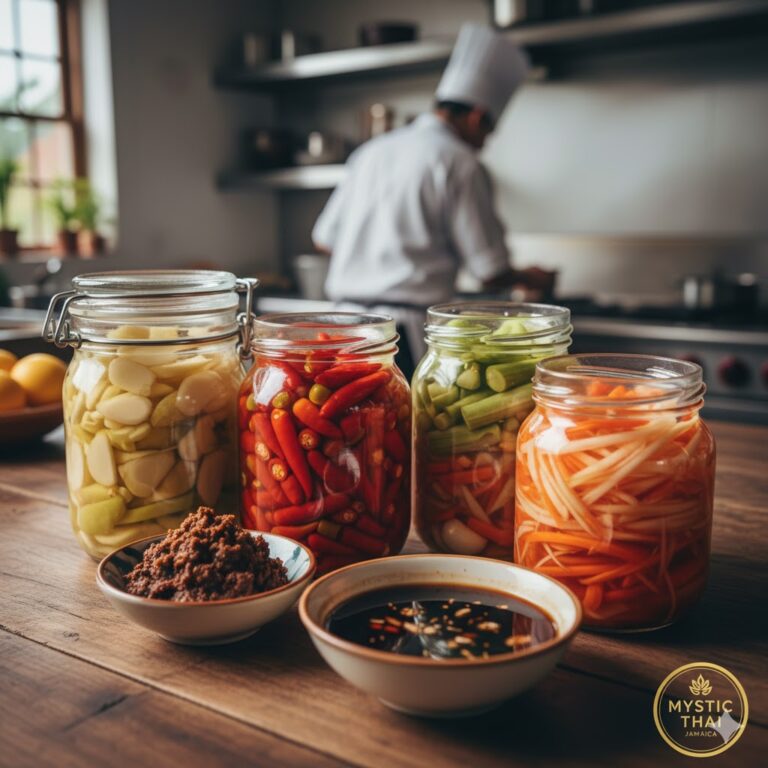
Vegetable fermentation in Thai cuisine often involves cabbage, mustard greens, bamboo shoots, and radishes. These vegetables sit in brine for days or weeks. As they ferment, they develop tanginess along with subtle savory notes. Since they are preserved naturally, they also retain their crunch.
How Mystic Thai Incorporates Them
At Mystic Thai, fermented vegetables enhance noodle dishes, salads, and stir-fries. Because of their acidity, they cut through rich sauces and balance heat. When paired with proteins or herbs, they lift flavors and prevent dishes from feeling heavy.
Fermented Soy Products: The Understated Flavor Boosters
Thai Fermented Bean Paste
Fermented soybean pastes appear in both Thai and Chinese-influenced dishes. These pastes add saltiness and natural sweetness due to slow fermentation. Chefs use them sparingly because they are highly concentrated.
Mystic Thai’s Applications
Mystic Thai uses fermented bean paste in specific stir-fries and braised dishes to build body and complexity. Although it works quietly in the background, it strengthens the overall flavor structure.
Fermented Rice Products: Subtle Aroma and Depth
Fermented Rice for Batter and Marinades
In northern Thailand, fermented rice mixtures appear in traditional recipes. These lightly fermented grains add subtle aroma, softness, and acidity. As they break down, they release natural sugars that enhance browning during cooking.
Role at Mystic Thai
Because Mystic Thai focuses on both traditional and modern techniques, fermented rice occasionally enhances marinades and frying batters. It improves texture while maintaining gentle flavor.
Why Fermented Ingredients Matter in Thai Cuisine
Balancing Flavor Profiles
Fermented ingredients add saltiness, umami, and complexity. When combined with fresh herbs, chilies, lime, and coconut milk, they create the famous Thai balance. Instead of overwhelming other elements, they support them.
Enhancing Authenticity at Mystic Thai
Mystic Thai uses fermentation as a way to stay true to Thai culinary principles. Each ingredient carries centuries of tradition. Although the flavors may seem bold, they become harmonious when prepared correctly. The team at Mystic Thai relies on the craft of blending these fermented components with fresh ingredients to create dishes that feel truly Thai.
FAQ
Q1: Why do Thai dishes use so many fermented ingredients?
Thai cuisine focuses on balanced flavors. Fermentation adds depth, umami, and richness that help achieve this balance.
Q2: Do fermented ingredients make dishes taste too strong?
Not when used correctly. At Mystic Thai, chefs combine fermented elements with herbs, spices, and citrus to create harmony.
Q3: Is fish sauce used in every Thai dish?
Fish sauce appears in many dishes, but not all. Chefs use it where it enhances the natural flavors.
Q4: Is shrimp paste safe for people with shellfish allergies?
No. Shrimp paste contains shellfish. Guests with allergies should inform the restaurant.
Q5: Can fermented vegetables be spicy?
Some varieties include chilies, but most rely on brine and natural fermentation rather than heat.
