
Scotch bonnet pepper brings fire, fruit, and fragrance. Thai cuisine thrives on layered heat and aromatic balance. When these two meet, something fascinating happens. Scotch bonnet does not simply add spice to Thai dishes—it transforms their structure. At Mystic Thai Jamaica, chefs understand how this Caribbean chili behaves differently inside Thai flavor architecture, producing smoother heat, brighter aroma, and deeper complexity.
Scotch Bonnet Releases Fruit Before Fire
Unlike Thai bird’s eye chili, Scotch bonnet releases sweetness before heat. Therefore, when it enters a curry paste or chili sauce, fruit notes appear first. Mango, citrus, and floral hints emerge. Only afterward does the warmth rise. As a result, Thai dishes gain a new flavor curve that feels rounder and more inviting.
Thai Herbs Reshape Scotch Bonnet Heat
When galangal, kaffir lime leaf, lemongrass, and basil meet Scotch bonnet, the chili’s intensity softens and spreads. Instead of a sharp impact, heat moves slowly and evenly across the palate. Consequently, dishes feel powerful without aggression. Moreover, aroma leads the experience before spice ever arrives.
Scotch Bonnet Bonds with Coconut Better Than Other Chilies
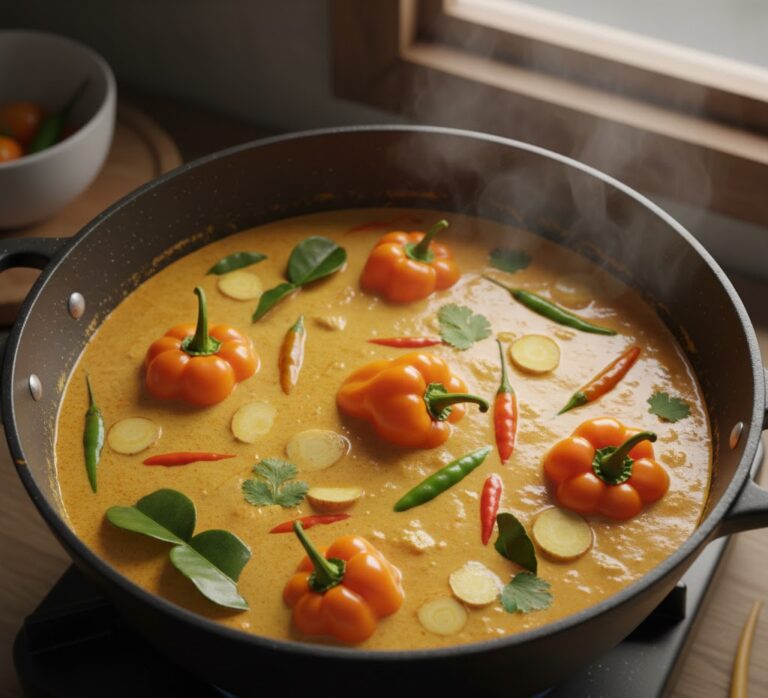
Coconut milk absorbs Scotch bonnet oils exceptionally well. Therefore, curries become silkier, richer, and more balanced. While bird’s eye chili can pierce through coconut, Scotch bonnet melts into it. As a result, Thai coconut soups and curries feel deeper, smoother, and more luxurious.
Caribbean Climate Changes the Chili’s Chemistry
Jamaican sunlight intensifies the chili’s natural sugars. Soil minerals deepen its aroma. Therefore, when used in Thai recipes, Scotch bonnet delivers more fragrance and less sharpness. This explains why the same pepper behaves differently in Jamaica than elsewhere. The climate programs the chili before cooking ever begins.
Thai Technique Unlocks the Chili’s Hidden Layers
Thai cooking emphasizes when ingredients enter the dish. When chefs add Scotch bonnet at different stages—during paste grinding, oil blooming, or final garnish—the chili expresses completely different personalities. Therefore, heat, aroma, and sweetness shift with timing. This control allows chefs to sculpt the flavor precisely.
Experience this fusion at Mystic Thai Jamaica:
Mystic Thai
FAQs
Q1: Is Scotch bonnet hotter than Thai chili?
It can be, but the heat feels smoother and less sharp in Thai dishes.
Q2: Does Scotch bonnet change Thai authenticity?
No. It enhances flavor while preserving Thai cooking principles.
Q3: Which dishes use Scotch bonnet best?
Coconut curries, chili sauces, seafood soups, and stir-fries.
Q4: Why does the heat feel cleaner?
Because fruit compounds soften the burn before it reaches the palate.
Q5: Can the spice level be adjusted?
Yes. Heat intensity adapts easily to guest preference.
