
Many cuisines build identity around a star ingredient. Thai food does not. Instead, it teaches restraint through collaboration. No single element claims the spotlight. Every ingredient exists in conversation with the others. This approach creates dishes that feel complete, expressive, and quietly confident—never loud, never singular.
Thai Cuisine Values Relationship Over Spotlight
Thai cooking begins with the idea that flavor emerges from interaction. Protein is important, but never alone. Herbs brighten. Acid lifts. Heat awakens. Sweetness rounds edges. Because each component plays a role, no ingredient dominates. The dish succeeds because everything arrives together, balanced and intentional.
Balance Protects the Palate
When one ingredient dominates, the palate tires quickly. Thai food avoids this fatigue. Chili excites but retreats. Coconut enriches without coating the mouth. Fish sauce deepens but never lingers alone. As a result, diners stay engaged from the first bite to the last, experiencing rhythm rather than repetition.
Techniques Are More Important Than Ingredients
Thai cuisine prioritizes how ingredients are treated. Timing matters more than quantity. Aromatics release at different moments. Sauces finish rather than form early. Because technique shapes flavor, no single ingredient needs to dominate. Skill replaces excess.
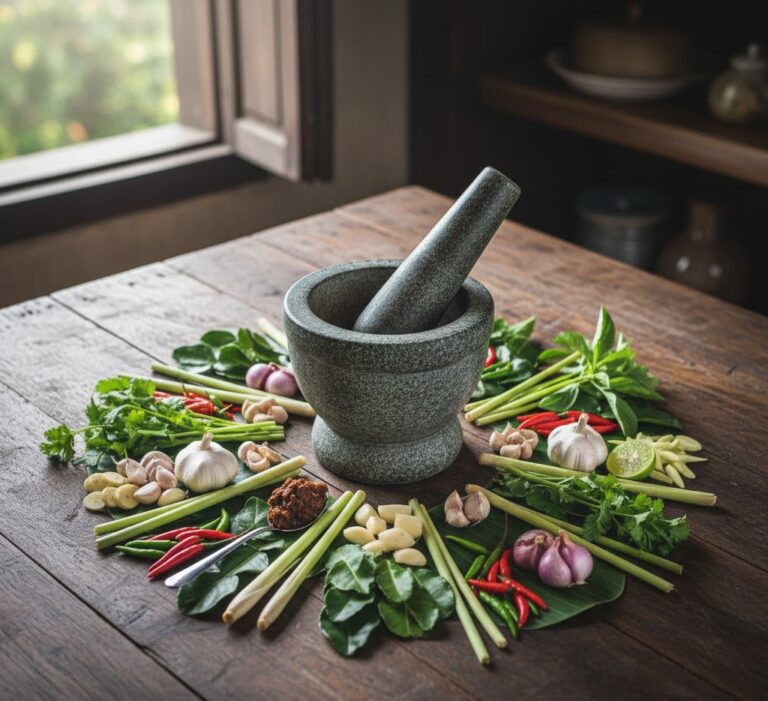
Cultural Roots of Collective Flavor
Thai dining culture values sharing. Dishes arrive together. Flavors overlap across the table. This collective experience reinforces the idea that no single taste should overpower others. Meals feel complete because they function as ecosystems, not performances.
Why This Philosophy Feels So Satisfying
Thai food leaves diners fulfilled without heaviness. Nothing overwhelms the senses. Nothing feels missing. Balance creates trust. When no ingredient dominates, the body relaxes. The meal feels safe, familiar, and nourishing—even when flavors are bold.
Experience Thai balance in its purest form at
👉 Mystic Thai
FAQs
Q1: Does Thai food have a main ingredient at all?
Yes, but it never stands alone. It shares space with supporting flavors.
Q2: Why doesn’t Thai cuisine highlight protein heavily?
Because balance matters more than hierarchy.
Q3: Is this approach intentional?
Yes. Thai culinary training emphasizes harmony over dominance.
Q4: Does this make Thai food healthier?
Often, yes. Balance reduces excess richness and fatigue.
Q5: How does this affect dining satisfaction?
Meals feel complete without overstimulation.

