
Galangal and ginger may appear similar, but they affect dishes in completely different ways. Chefs at Mystic Thai Jamaica choose carefully because the right root determines flavor, aroma, and authenticity. Galangal delivers bright, citrusy notes, while ginger provides warmth and mild spice. Each root’s unique profile changes how a dish tastes from the first bite to the lingering aftertaste.
Appearance: Spotting the Difference
Galangal has pale, wood-like flesh and a tougher exterior, whereas ginger is softer, fibrous, and darker. The visual distinction is crucial for cooks, as the harder galangal requires more precise slicing or pounding to release its full flavor. Even small substitutions can noticeably alter the final taste.
Aroma and Flavor: The Immediate Impact
Galangal gives dishes a sharp, citrusy, and slightly pine-like aroma, while ginger delivers warm, peppery, and sweet notes. In Thai cuisine, aroma sets the stage for taste, and using the wrong root can shift a dish’s sensory experience. Mystic Thai chefs select roots with precision to ensure the first sniff excites and prepares your palate.
Cooking Behavior: Heat, Texture, and Extraction
Galangal is dense and needs longer cooking to release flavor, while ginger infuses dishes more quickly. Misusing either root can result in uneven taste or aroma. Chefs at Mystic Thai carefully time the addition of each root so flavors develop fully, ensuring the dish tastes balanced from start to finish.
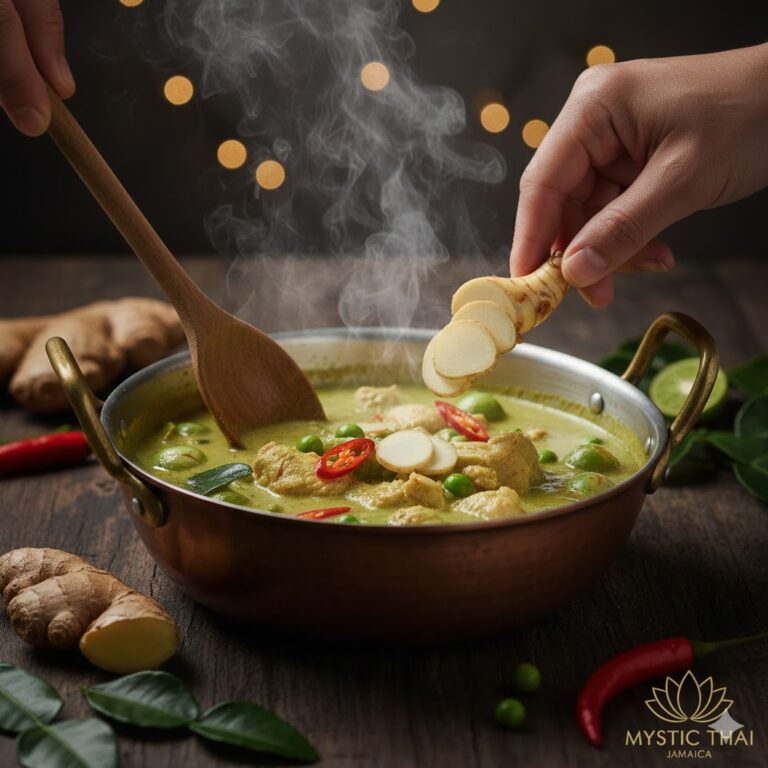
Culinary Applications: When to Use Each Root
Galangal shines in soups like Tom Yum, curries, and seafood marinades for its bright, herbal punch. Ginger works well in stir-fries, teas, and lighter dishes for its warmth and gentle spiciness. At Mystic Thai, chefs sometimes combine both roots to layer flavors, creating dishes with depth, complexity, and balance.
Cultural Significance: Authenticity Matters
Galangal is more than an ingredient; it represents Thai culinary heritage. Using it correctly preserves tradition and ensures authenticity. Ginger, though popular globally, lacks the same cultural weight in Thai dishes. Chefs at Mystic Thai respect these distinctions, making every dish both flavorful and true to its roots.
Final Thoughts: Transform Your Cooking with the Right Root
The choice between galangal and ginger is more than a simple substitution—it can redefine a dish. Mystic Thai Jamaica emphasizes this root’s transformative power, from aroma and first bite to the lasting aftertaste. Next time you enjoy Thai cuisine, notice the subtle differences—one root can truly change everything.
👉 Explore the full menu: Mystic Thai Jamaica Menu
FAQs
Q1: Can I substitute ginger for galangal in Thai dishes?
Yes, but it will alter aroma, taste, and authenticity. Galangal is sharper and citrusy; ginger is milder and warmer.
Q2: What dishes require galangal over ginger?
Tom Yum Soup, Thai curries, and seafood marinades perform best with galangal.
Q3: Are galangal and ginger interchangeable in stir-fries?
For mild stir-fries, ginger works, but galangal gives a more authentic Thai flavor.
Q4: How should I store galangal and ginger?
Refrigerate for up to two weeks, or freeze slices for a longer shelf life.
Q5: Why is galangal called a mystery root?
Its unique flavor and aroma can completely transform a dish’s taste and sensory experience.

