
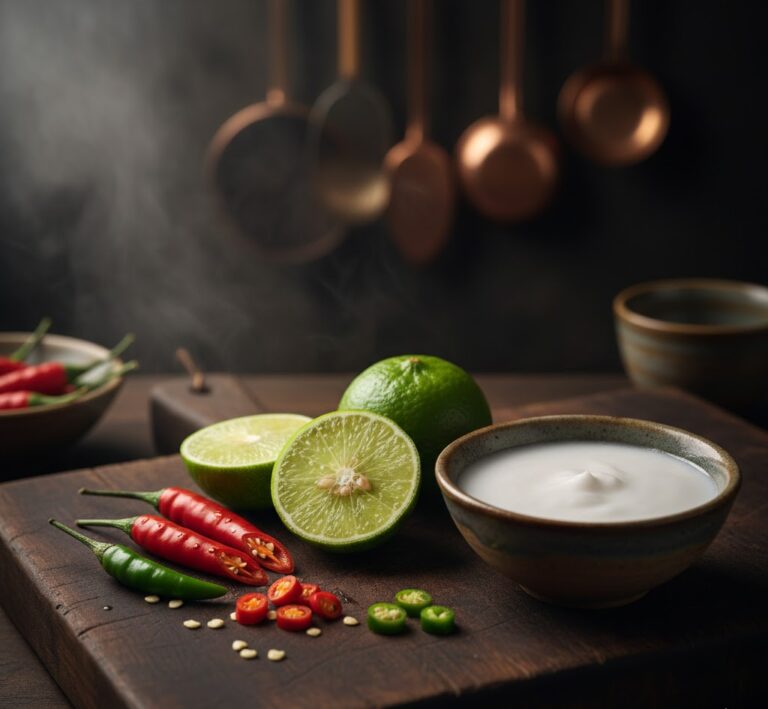
Thai cooking does not treat fat, acid, and heat as separate elements. Instead, it lets them communicate. Each component moderates the others, creating food that feels vibrant but controlled. Rather than overwhelming the senses, Thai dishes guide them. This dialogue between fat, acid, and heat explains why Thai food feels exciting yet effortless to eat.
Fat Softens Heat Without Silencing It
Fat acts as a cushion in Thai cooking. Coconut milk, nut oils, and natural fats from proteins coat the mouth gently. As a result, chili heat feels rounded instead of sharp. However, Thai cuisine avoids excess fat. Because of this restraint, heat remains present but never lingers aggressively. Flavor stays expressive while intensity stays controlled.
Acid Resets the Palate Mid-Bite
Acid functions as a reset button. Lime juice, tamarind, and fermented acids cut through fat instantly. Therefore, the palate clears before heat can build too far. This interaction keeps each bite feeling fresh. Moreover, acid sharpens aroma, making herbs and spices feel brighter without adding weight.
Heat Stimulates, Then Steps Back
Thai chilies release heat quickly. Because they are often used fresh, the capsaicin hits fast and fades sooner. When heat meets acid, it disperses. When it meets fat, it softens. Consequently, spice excites without dominating. Flavor remains the lasting impression.
Timing Controls the Conversation
Thai chefs add ingredients at precise moments. Chilies may enter early to infuse oil lightly. Acid often arrives near the end to preserve brightness. Fat stays present throughout. Because of this timing, no element overpowers the others. Instead, they exchange roles continuously as the dish cooks and as it is eaten.
Balance Creates Emotional Comfort
When fat calms, acid lifts, and heat energizes, the body relaxes. Thai food feels safe to eat, even when bold. The brain registers harmony instead of threat. This explains why Thai meals feel satisfying without heaviness and exciting without exhaustion.
Experience this balance in action at
👉 Mystic Thai
FAQs
Q1: Why doesn’t Thai food feel greasy?
Because fat is used sparingly and balanced with acid.
Q2: Does acid reduce chili heat?
Yes. Acid increases saliva and disperses capsaicin.
Q3: Why is coconut milk so common in Thai food?
It softens heat while carrying aroma effectively.
Q4: Can heat be adjusted without ruining balance?
Yes. Thai cooking scales heat while preserving structure.
Q5: Is this balance intentional or traditional habit?
It is deeply intentional and refined through centuries.

