
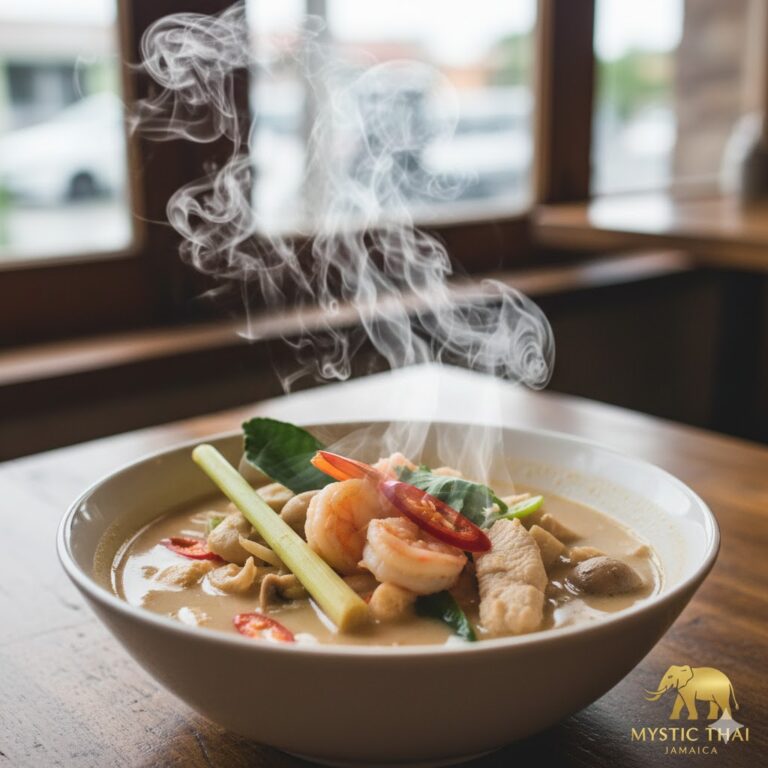
Steam rarely gets credit in cooking. However, in Thai cuisine, it plays a vital role. Long before food reaches the plate, steam begins shaping flavor, aroma, and texture. At Mystic Thai Jamaica, chefs understand this invisible process deeply. Steam does more than cook food. Instead, it carries flavor, softens ingredients, and prepares the senses for the first bite.
Steam as a Natural Flavor Transporter
When heat meets moisture, steam rises carrying aromatic oils from herbs and spices. Because Thai cooking relies heavily on fresh ingredients, this process matters deeply. Lemongrass, galangal, chilies, and kaffir lime leaves release fragrance into the steam. As a result, flavor spreads evenly through the dish without overpowering any single element.
Why Thai Cooking Uses Controlled Moist Heat
Thai chefs rarely rush steam-based cooking. Instead, they control temperature carefully. Gentle steam keeps proteins tender while vegetables stay vibrant. Consequently, dishes feel lighter and cleaner on the palate. Unlike aggressive boiling, steam preserves natural sweetness and prevents bitterness from forming.
Steam Awakens Aroma Before Taste
Steam reaches the nose before food touches the tongue. Therefore, it primes the brain for flavor. Thai cuisine uses this effect intentionally. As steam rises, diners sense lime, basil, and chili even before tasting. This anticipation heightens enjoyment and makes each bite feel more complete.
Texture Transformation Through Steam
Steam changes texture quietly but powerfully. Rice becomes fluffy, seafood stays delicate, and vegetables soften without losing structure. Because of this balance, Thai dishes feel comforting yet fresh. Steam allows ingredients to remain expressive instead of heavy or waterlogged.
Steam and Balance in Thai Cuisine
Balance defines Thai cooking. Steam supports this philosophy by blending flavors rather than forcing them together. Sweetness, heat, acidity, and umami circulate naturally through vapor. As a result, dishes taste unified rather than layered in extremes. Steam helps ingredients speak in harmony.
How Mystic Thai Uses Steam with Intention
At Mystic Thai Jamaica, chefs respect steam as a guiding element. They lift lids at precise moments, adjust heat patiently, and let aroma guide decisions. Because of this awareness, dishes arrive fragrant, balanced, and alive. Steam never steals attention, yet it shapes every plate.
🔗 Experience Thai flavor shaped by tradition and technique:
Mystic Thai
FAQs
Q1: Why is steam important in Thai cooking?
Steam carries aroma, distributes flavor evenly, and preserves texture.
Q2: Does steam affect taste or only aroma?
It affects both. Aroma influences how the brain perceives taste.
Q3: Which Thai dishes rely most on steam?
Curries, soups, rice dishes, and seafood preparations depend heavily on steam.
Q4: Is steaming healthier than other methods?
Yes. It retains nutrients while avoiding excess oil.
Q5: Can steam-based techniques be used at home?
Absolutely. Gentle heat and covered cooking recreate similar results.

