
Every unforgettable Thai dish begins with more than just taste—it begins with aroma. At Mystic Thai Jamaica, our chefs carefully harness the power of fragrant herbs and aromatics, balancing scent alongside sweet, sour, salty, and spicy flavors to create a fully immersive dining experience.
Aroma is the hidden foundation of our menu—the element that awakens your senses and elevates fresh produce, seafood, and meats into bold, harmonious dishes. Today, we reveal the secrets behind treating aroma as a “fifth ingredient.”
1. The Foundation: Essential Thai Aromatics
Mystic Thai chefs rely on core aromatics like lemongrass, galangal, kaffir lime leaves, garlic, and Thai basil. These ingredients are carefully prepared and layered into dishes to create depth and fragrance that hits diners before the first bite. Each aromatic is treated intentionally—bruised, sliced, or simmered at precise moments to release its essential oils and maximize impact.
2. Layering Aroma in Curries and Soups
Chefs build aromatic complexity by adding ingredients at different stages. Hardier aromatics like lemongrass, galangal, and kaffir lime leaves are simmered early to infuse broths and sauces. Tender herbs, such as Thai basil, are added last to preserve their fragrance. This layering ensures that each dish is fragrant, balanced, and harmonious.
3. Aroma in Stir-Fries and Wok Dishes
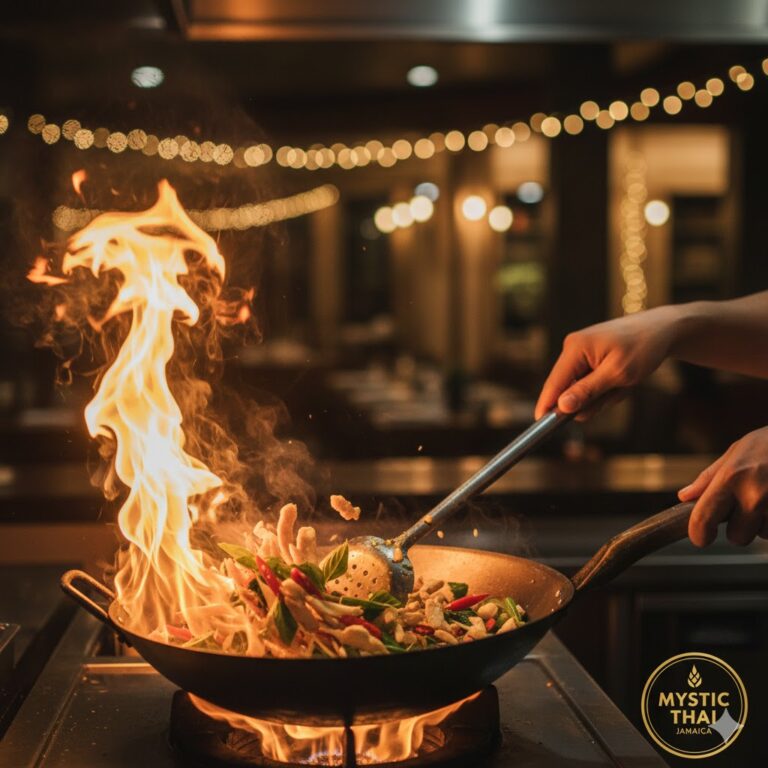
Aromatics are equally important in stir-fries, where high heat quickly releases essential oils. When combined with soy, lime, and chili, the scent of fresh herbs lifts the dish, creating a bright, flavorful experience. This careful handling of aroma gives dishes like Pad Kra Pao and Pad Thai their signature depth.
4. Fresh Herbs as a Finishing Touch
Mystic Thai adds tender herbs at the final stage of cooking to preserve their natural fragrance. This finishing touch ensures a burst of scent when the dish is served, enhancing both presentation and flavor perception. From Thai basil to coriander, the careful addition of fresh herbs elevates every plate.
5. Aroma and Seafood
Jamaica’s fresh seafood pairs beautifully with aromatic Thai ingredients. Lemongrass, lime leaves, and galangal bring brightness to shrimp, fish, and calamari, enhancing their natural flavors while creating a fragrant, inviting dish. Aroma in seafood dishes ensures a balance between richness and freshness.
6. The Art of Balance: How Chefs Perfect Aroma
Thai cuisine is celebrated for harmony—balancing sweet, sour, salty, spicy, and aromatic elements. Each dish at Mystic Thai is carefully tasted and adjusted to achieve this delicate balance. Aroma awakens the senses, complements flavors, and makes the dining experience truly memorable.
Final Thoughts
Aroma is the unsung hero of Thai cuisine, and at Mystic Thai Jamaica, it is treated as a fifth essential ingredient. By selecting, layering, and timing the use of aromatics, our chefs elevate each dish into a full sensory experience.
The next time you enjoy a Thai curry, stir-fry, or soup at Mystic Thai, pay attention to the fragrance—it’s not just an afterthought; it’s the first flavor you taste.
👉 Visit our menu to experience the aromatic magic behind every dish.
FAQs: How Thai Chefs Use Aroma as a Fifth Ingredient
Q1: Why does Thai food smell so fragrant before tasting?
Chefs use aromatics like lemongrass, galangal, kaffir lime, and Thai basil. Their essential oils release scent during cooking, priming your senses.
Q2: Is aroma as important as flavor in Thai cooking?
Yes. Aroma enhances perception, balances flavors, and is considered a “fifth ingredient” in authentic Thai cuisine.
Q3: Can I recreate this aroma at home without fresh herbs?
Dried herbs and pastes help, but fresh aromatics release essential oils for a brighter, more authentic scent.
Q4: When should herbs be added during cooking?
Hardier aromatics go in early; tender herbs are added at the end or just before serving.
Q5: Which dishes best showcase aroma at Mystic Thai?
Green curry, tom yum soup, pad kra pao, and red curry perfectly highlight the aromatic layers used in Thai cooking.

