
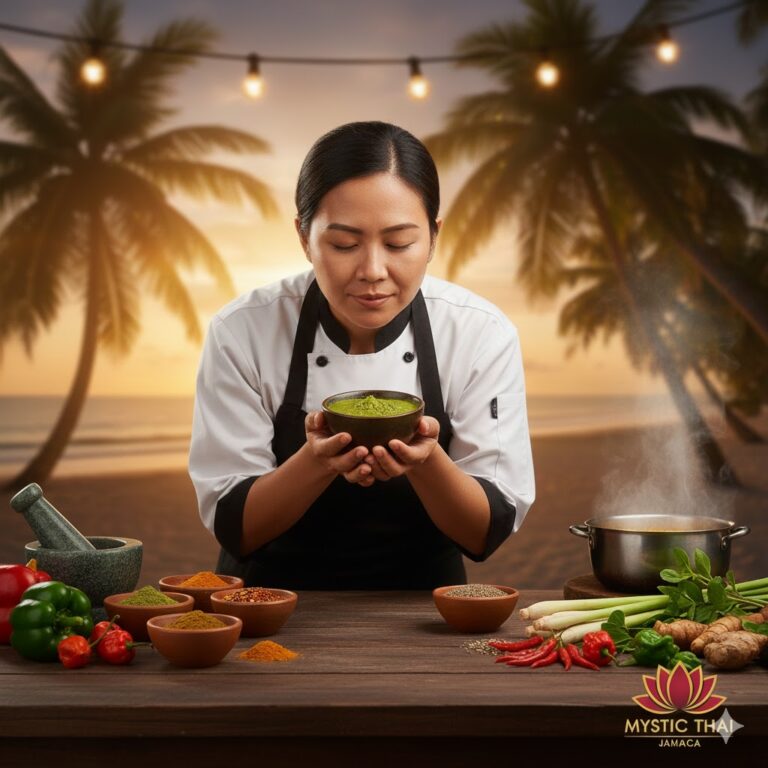
Before a Thai chef lights the stove, the cooking already begins. Aroma acts as the first checkpoint, guiding decisions long before heat touches the pan. At Mystic Thai Jamaica, chefs rely on their sense of smell to judge freshness, balance, and readiness. This practice, often called the “aroma test,” ensures every dish starts with intention and respect for ingredients. As a result, flavor stays honest, vibrant, and deeply rooted in tradition.
The First Signal of Freshness
Fresh Thai cooking depends on herbs and spices that speak immediately through scent. Lemongrass should smell citrusy and bright. Galangal must release sharp warmth. Kaffir lime leaves should feel alive through their oils. Therefore, chefs smell each ingredient before cutting or pounding. If the aroma feels dull, the ingredient never enters the dish. This step protects quality and preserves authenticity.
Reading Balance Through Scent
Thai cuisine values harmony, and aroma reveals imbalance instantly. Too much garlic can overpower. Old chilies smell flat instead of fiery. Meanwhile, shrimp paste must smell deep and savory, never harsh. Because of this, chefs smell combinations together before cooking. That way, they adjust ratios early rather than fixing problems later. Consequently, the final dish tastes clean and intentional.
How Aroma Predicts Flavor Outcome
Smell predicts how flavors will unfold on the palate. A curry paste that smells rounded usually tastes balanced. On the other hand, sharp or muted aromas signal missing elements. Thai chefs trust this connection deeply. Therefore, they fine-tune pastes, sauces, and marinades before heat locks flavors in. This practice prevents heavy seasoning and keeps dishes light yet complex.
Training the Nose Like a Skill
Thai chefs train their sense of smell the same way musicians train their ears. Over time, they recognize subtle changes in herbs, seafood, and spices. Moreover, they learn how aromas shift with humidity and heat. Because the Jamaican climate affects ingredients differently, Mystic Thai chefs adapt while staying true to Thai principles. As a result, every dish respects both tradition and location.
Why the Aroma Test Matters at Mystic Thai
At Mystic Thai Jamaica, aroma protects the soul of Thai cooking. It ensures ingredients remain fresh, flavors stay balanced, and dishes feel alive. While recipes matter, scent guides execution. Ultimately, this quiet ritual separates ordinary cooking from meaningful cuisine. Guests may not see the aroma test, yet they taste its impact in every bite.
👉 Explore our menu to experience how aroma-driven cooking shapes every dish.
FAQs
Q1: What is the Thai aroma test?
It is a sensory check where chefs smell ingredients and combinations before cooking to judge freshness and balance.
Q2: Why is aroma so important in Thai cuisine?
Aroma predicts flavor and harmony, helping chefs adjust before cooking begins.
Q3: Do all Thai chefs use this method?
Yes, traditional Thai cooking heavily relies on smell as a core culinary sense.
Q4: Can home cooks use the aroma test?
Absolutely. Smelling ingredients before cooking improves balance and confidence.
Q5: Which ingredients are most important to smell first?
Herbs, curry pastes, seafood, and fermented sauces reveal the most through aroma.

