
Thai dining is never meant to be rushed. Unlike cuisines built around a single centerpiece dish, Thai food unfolds gradually. Each plate adds a new sensation, a new contrast, or a moment of pause. At Mystic Thai Jamaica, dining feels like a journey because Thai cuisine is designed to move the diner—emotionally, sensorially, and rhythmically—from beginning to end.
The Meal Begins Before the First Bite
In Thai dining, aroma sets the direction. Warm dishes arrive, releasing steam, herbs, and spice into the air. This first moment prepares the brain and appetite. Therefore, the journey begins before tasting. Smell creates anticipation, signaling what is light, what is bold, and what will follow.
Multiple Dishes Create Narrative Flow
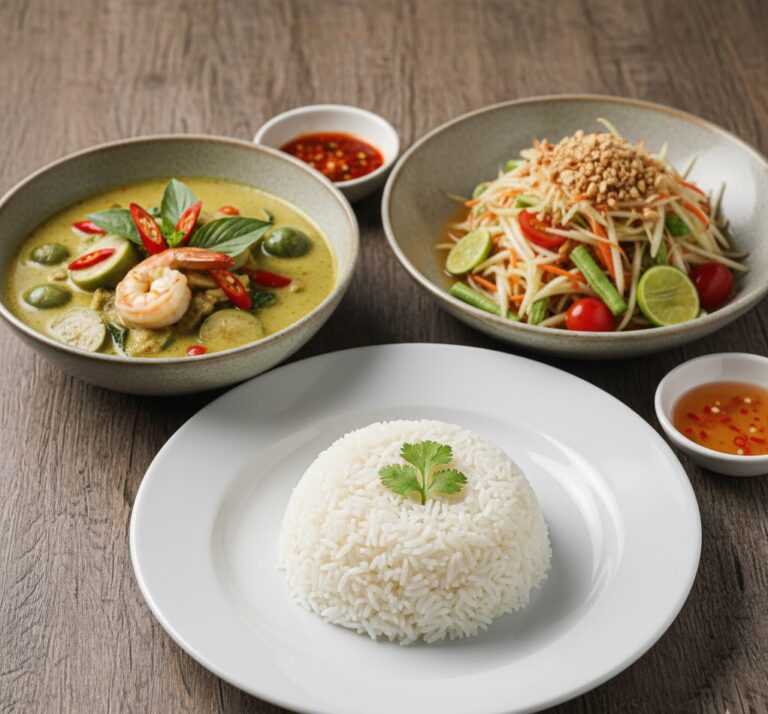
Thai meals are composed, not stacked. Soups, curries, stir-fries, and salads arrive together or in gentle waves. Each dish plays a role. Some refresh. Some ground. Some excite. As a result, the diner moves between flavors instead of finishing one and stopping. This movement creates progression—like chapters in a story.
Balance Replaces Heaviness
Thai cuisine avoids overload. Rich dishes are balanced by sour, spicy, or herbal elements. Therefore, the meal never peaks too early. Instead, energy stays steady. The diner feels guided rather than overwhelmed. This balance allows attention to stay present from start to finish.
Pacing Is Built Into the Food
Thai food encourages slower eating. Heat unfolds gradually. Spice builds, fades, then returns. Sweetness appears late. Because flavors evolve as dishes cool, the experience rewards patience. Every few bites feels different from the last. Thus, the journey continues even within a single plate.
The Ending Feels Resolved, not finished.
Thai meals often end without dessert—and still feel complete. Why? Because the final dishes restore balance rather than add weight. Herbal notes calm the palate. Acidity refreshes. The body feels satisfied, not stuffed. This sense of resolution is why Thai dining feels like an arrival, not a stop.
Experience Thai dining as a journey at
👉 Mystic Thai
FAQs
Q1: Why doesn’t Thai dining focus on one main dish?
Because balance is achieved across multiple dishes, not within one.
Q2: Is Thai dining meant to be shared?
Yes. Shared plates encourage movement and connection.
Q3: Why does Thai food feel satisfying without dessert?
Because the meal restores balance rather than chasing sweetness.
Q4: Does spice control the pace of eating?
Yes. Gradual heat naturally slows consumption.
Q5: What makes Thai dining different from Western meals?
It prioritizes flow, balance, and sensory progression over structure.

